A Selection of Pages from 2019
I started 2019 reading in a cabin on the beach in Simon’s Town, South Africa. I was reading outside on a deck staring out onto False Bay, a towel across my lap, sunscreen haphazardly slathered on my arms and legs, and a cap on my head. Sea air refreshing my lungs and skin from two weeks of camping in Kenya and Uganda. Thanks to the haphazard sunscreen slathering, my legs and neck were gradually turning red in strange patches throughout the day, until I retreated to the couch inside, covered in red rugs and woven cushions. Not a bad start to the year, all things considered.
In that cabin, I felt worlds away from the slums we’d passed on the drive out of Cape Town’s city centre. Simon’s Town – named after the first governor (a Dutch colonist) – felt closer to my parent’s beach house on the Victorian coastline (or the writing retreat of an aspiring upper-middle class poet), than the African savannahs I had pictured when planning my trip. This place was another continent and yet strikingly similar to home. Our trek up Table Mountain and through the Kirstenbosch National Botanical Garden had been a tour of Acacia plants, whose sister’s reside in Australia. Kenya and Uganda had been filled with introduced Eucalyptus trees. I picked out two books from the cabin’s bookshelves to start my year of reading.
First up Table Mountain: To Cape Point by Carrie Hampton. Full of beautiful pictures and information about the area. It could have been a Great Ocean Road souvenir book – a reminder of the super familiar yet different atmosphere I felt in Africa, particularly South Africa. The book didn’t feel foreign or different at all. As a white tourist, in group of white women, the strangeness of South Africa was easy to momentarily overlook. It was easy for it to look like home from different angles, from the pretty coastal landscape angles to the ugly colonial segregated (white) world-undermining angles. It was yet another colonial wake-up call. A reminder that colonisation is ongoing there and ongoing back home and I am part of it, whether I choose to see it or not and wherever on earth I am.
Next off the cabin’s shelf was Gift from the Sea by Anne Morrow Lindbergh. I can’t remember what this book was about, but it was familiar. The cut and language and smell of it reeked of childhood and books passed to me by honorary aunts and family friends. The pages were browning on the edges and the blue cover seemed imbued with sea salt. I devoured it quickly, like any human or seagull devours hot chips on the beach. GoodReads advises that it is one of those books offering musings and meanderings on life, so it makes sense I devoured it quickly in the context of a New Year and yet don’t remember any of the pieces of advice it offered.
Throughout my trip to Africa I had attempted to reread The Metamorphosis and Other Stories by Franz Kafka. It had the bonus of being a translated work that instantly put me ahead for Book Bingo for 2019 (yes, I have a Book Bingo for the year, shush you). I had read The Metamorphosis before, but Kafka’s shorter stories offered fragments of social commentary that felt meaningful and timely to start a year of personal and political change. Still, not that easy to read. I finished it back home rotating between my bed, my garden lined with jasmine flowers and the lounge room lined with a million cushions.
From there I also read The Old Man and the Sea by Ernest Hemingway. A classic that’s been sitting on my bookshelf for a while and I had never read. It seems it’s my curse to be forever disappointed by the classics. I enjoy the language and the insight to everyday life they offer, but otherwise my 21st century plot-focused mind is forever waiting for the twist or conflict or world-shattering reveal in the final moments. Perhaps Game of Thrones has forever ruined slice of life content for me, or I should pre-read synopses to know what I’m in for before I hang out for twists when the book is simply about an old man and the sea (and musings on life and death and meaning etc.).
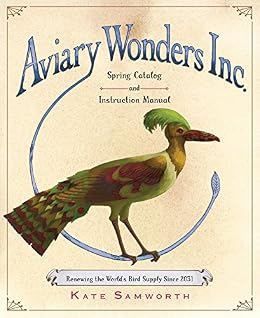 At Clunes Book Festival 2019 (one of my favourite places and events in the entire world) I purchased upwards of 17 books, including two copies of Aviary Wonders Inc. Spring Catalog and Instruction Manual by Kate Samworth. A satirical, beautiful, heart-wrenching, existential piece of art that you definitely shouldn’t gift to anyone, because anyone who would appreciate this book will find it completely depressing and everyone else just won’t get it. But you should. Get it, I mean. The book imagines a scenario where all birds are extinct and offers a catalogue for designing your own perfect bird. Out of all the books I’ve read this book summarises 2019 best for me, which is rather depressing. The past few years has seen the state of the climate discussed somewhat more productively in the media. The School Strikes have done much to mainstream calls for action, there is a gradual shift from a focus on individual behaviours to systemic changes needed, and the Australian Conservation Foundation (alongside other media, non-for-profit and political groups) weren’t wrong when they labelled the Australian Federal Election the 'climate election'. Yet the outcome of that election was rotten for the environment, the current Australian government is currently working on tearing down so-called “green tape” (which, to be frank, is already as weak as ‘tape’ sounds), and it looks like hardly any country is going to meet their climate targets.
In times like this, it sometimes feels immensely privileged of me to be focused on issues of biodiversity conservation and extinction rather than climate change or other social issues. Yet these issues are inherently linked, and our biggest problems involve both of them. The drying up of the Murray Darling is bad for water and bad for fish biodiversity. We lose species (i.e. biodiversity), we lose important functions of ecosystems, ecosystems that we have already altered beyond recognition. We still don’t quite understand the repercussions of all this, but I’ll let you in on a little secret: it ain’t good. I don’t think it’s useful to discuss my existential/apocalyptic fears too much here, but I think it’s important to consider (especially given recent events) that the changing climate is already impacting people around the world. Even if those people aren’t us or our loved ones yet, I reckon we should start to do something to create a better future for all of us.
But let’s push aside those dark thoughts for today and turn to nicer things, like book recommendations from friends! This year I was recommended The Lagoon: How Aristotle Invented Science by Armand Marie Leroi. This book took me way too long to read. My excuse is that while it was beautifully written, it was dense and difficult for me to read after a day PhD-ing. Recommend to science writing and philosophy of science nerds. It is truly beautiful and fascinating, but requires some energy. I was also recommended The Village Effect: Why Face-to-Face Contact is Good for Our Health,
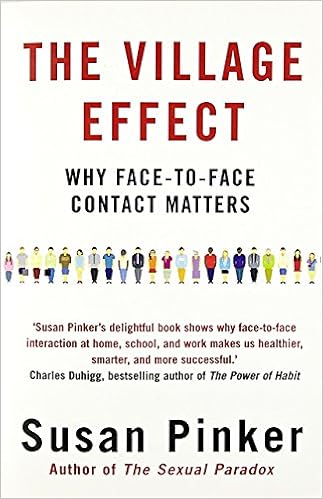 Happiness, Learning, and Longevity by Susan Pinker. This book feels like a long-form The Guardian or The Conversation science article, and I don’t know whether that’s a good or bad thing. I think it’s a good thing because it’s easy to read and packed full of interesting information. I think it’s a bad thing because I feel like I quickly scrolled/scanned through and only learnt what I already knew and/or believed to be true. Basically having friends and a partner is good unless you get fooled by an identity thief. But yeah, self-care / socialising is important for everyone, we’re social animals go figure. (In hindsight, I appreciate that the friend/s recommending this to me were probably trying to subtly tackle my PhD stress.)
After years of slowly chipping away on holidays, in courtyards and in the aforementioned cushion-infested lounge room I finally finished Alan Turing: The Enigma by Andrew Hodges. I honestly think this book is written very well considering its content and dutiful focus on the mathematical research of Alan Turing. However, it was incredibly difficult for me to read after a day at the office, and, honestly, maybe I just don’t care enough about maths (gasp!). Alan Turing’s story is fascinating, horrible and important, but the interesting parts weren’t enough for me to muster up the focus needed to comprehend the detail of his work. My favourite parts were when the author discussed in simpler language the importance of Turing’s work, as well as the final chapters when he discussed in detail the social context and attitudes around homosexuality in his final years as well as the years preceding. Highly recommend to maths/computer/engineering-focused friends. But otherwise, just read some Wikipedia pages and save yourself a year or two.
Thanks to my own reluctance to give up on some of the more challenging reads discussed above (as well as my own distraction by other important facets of life…), I didn’t meet my reading goal for this year. I definitely didn’t read enough to write a post with my favourite books of the year, let alone my favourite science or natural history writing. But so be it. I’m ending the year in my adorably shaky share house, reading some delightfully distracting fiction, being talked into playing video games by my housemates, and getting excited for a busy, challenging, climate-tackling 2020. Come at me.
Enjoy Reading This Article?
Here are some more articles you might like to read next:
- Research Summaries
- The power of names
- Where do we want this story to go?
- How to talk about COVID-19 for conservation professionals
- A waterless barrier could halt cane toad spread in Western Australia
- Chasing Mr Toad
- Messaging (and strategy) matters: a new systematic review
- When in doubt, go to the library
- Seeds in the Sand
- First paper: Australian threatened species are "tweeting for their lives"